


Table of Contents
As a parent, you watch every little thing your baby takes in. Food, formula, and even sleep are big topics. But what about water? Understanding your baby’s water intake guidelines is key to keeping your little one healthy. We’re here to give you the facts straight from the experts so you know exactly when babies can drink water and how much is safe.
Let’s dive into the essential advice for providing water for infants and beyond!
When Can Babies Start Drinking Water?
This is one of the most common questions new parents ask, and the answer is clear: newborns should not be given water.
Why Newborns Should Not Be Given Water?
A baby’s body is tiny, and giving them water too early can be dangerous. It fills their small stomachs, making them miss out on the vital nutrients they need from breast milk or formula. The World Health Organization (WHO) and pediatricians worldwide agree on a simple rule.
Expert Recommendation:
Do not introduce water until your baby is at least 6 months old. This is the recommended age for introducing water to the baby.
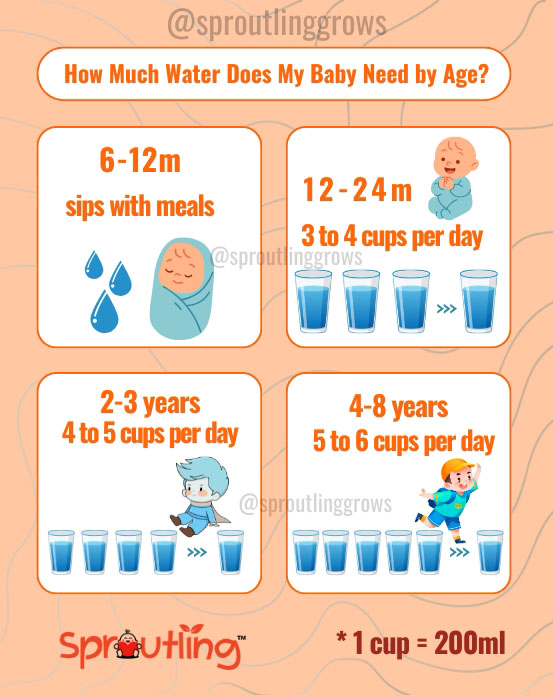
How Much Water Does My Baby Need by Age?
Age plays the biggest role in determining the amount of water your baby needs.
Water for Newborns (0–6 Months)
Your baby needs no extra water during these first six months. That’s right—zero!
Why don’t they need water?
Breast milk and formula are over 80% water. These provide all the hydration a water for a 0–6-month-old baby needs. Your breastfed baby’s water needs are completely met by your milk. A formula-fed baby’s water needs are met by the correctly mixed formula.
Water for a 6-Month-Old Baby
When your baby turns six months and starts solids, you can officially offer water.
Start with small sips
Offering just a few sips of water for the baby, about 2 to 4 ounces (60-120 ml) a day, is usually safe. The primary source of hydration should still be breast milk or formula. This small amount helps them practice drinking from a cup.
Water for a 9-Month-Old Baby
As your baby eats more solid foods, their water intake can increase slightly.
Daily water quantity:
A 9-month-old baby can safely drink 4 to 8 ounces (120-240 ml) of water per day. This is an excellent time to get them used to having water during mealtime. This prepares them for becoming water for toddlers in just a few short months.
12 Months and Above (Toddlers)
Once your child celebrates their first birthday, they become a water for toddlers!
Recommended water intake per day:
The goal is about 8 to 32 ounces (240 ml to 950 ml) of water a day, plus milk or formula. Encourage them to drink water throughout the day, especially during active play. This is a great time to focus on cup training.
Water Guidelines for Breastfed vs. Formula-Fed Babies
The source of their milk does affect their overall water needs.
Breastfed Baby Water Needs:
Why does breast milk keep them healthy? Breast milk changes its composition throughout the day and even during a single feeding. It is the perfect source of hydration and nutrients, even in hot weather.
When additional water is needed? Only when they are 6 months or older and starting solids should you offer those small amounts of water.
Formula-Fed Baby Water Needs
Importance of correct formula dilution: Always follow the directions exactly when mixing the formula. Never add extra water to stretch the formula; this is vital safety advice.
When is water necessary? The correctly mixed formula meets a formula-fed baby’s water needs until they turn 6 months old. Once they start solids, you can introduce water.
What Type of Water Is Safe for Babies?
Not all water is created equal for a developing body. Knowing the right type is important.
Tap water vs. bottled water for a baby:
Standard tap water is safe to give your baby after 6 months. If you use well water, get it tested first. Bottled water is generally fine, but check the label to ensure it is not high in minerals (especially fluoride).
Boiling water for baby formula:
You must boil tap water and let it cool before mixing the formula for babies under 6 months old. This kills any bacteria in the water or along the way. After 6 months, if your water is safe, boiling may not be necessary, but check your local guidelines.
When is filtered water okay?
A home filter can remove impurities and improve taste, but it does not kill bacteria like boiling does. Use it only when preparing water for older babies or toddlers.
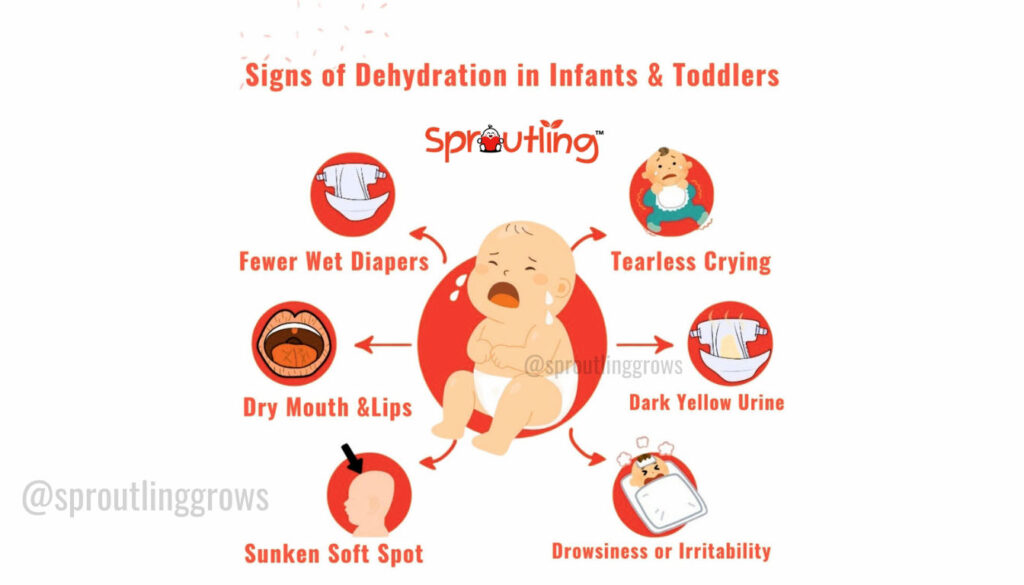
Signs of Dehydration in Infants & Toddlers
Recognizing dehydration in babies early is critical.
Early Signs
- Fewer wet diapers (less than 6/day)
- Dry lips or mouth
- Fussiness
- Dark yellow urine
Severe Signs of Dehydration in Infants
- Sunken eyes
- No tears while crying
- Extreme sleepiness
- Cool hands and feet
Seek medical help immediately if you notice these.
Water Safety: Risks Every Parent Must Know
Baby Water Intoxication:
This is a serious, yet preventable, risk. Baby water intoxication happens when a baby is given too much water.
What it is and why it happens?
Too much water dilutes the sodium and other electrolytes in your baby’s body, leading to a serious imbalance.
How to avoid it?
Never over-dilute the formula by adding extra water. Do not give water to babies under 6 months. Stick strictly to the recommended small amounts for babies 6-12 months.
How to Safely Introduce Water to a Baby?
When starting to introduce water to the baby after 6 months:
- Begin with 1–2 teaspoons during meals.
- Offer water in a cup, not a bottle.
- Increase gradually as solids increase.
Choose the best cups for baby water to support oral development.
Best Cups and Bottles for Introducing Water
Pediatric dentists and occupational therapists recommend using an open cup or a straw cup first. A small, sturdy open cup helps them learn to sip and supports proper oral development. A sippy cup with a rigid spout is generally discouraged in the long term, as it can interfere with proper mouth positioning. The best cup is one that encourages sipping, not sucking.
Practical Tips for Parents
- Offer water during meals to build a routine.
- Increase water intake during hot weather or outdoor play.
- Pack a clean cup and boiled water while traveling.
- Never dilute the formula with extra water.
- Use reminders if your toddler forgets to drink water.

Conclusion
Water is vital for growth, but timing is everything. Stick to the rule: no water for 6 months. After 6 months, introduce small sips of water for the baby and slowly increase the amount as they transition to solids. Always keep an eye out for signs of dehydration in infants and avoid baby water intoxication by mixing formula correctly and not overdoing the water. You are doing a great job caring for your little one!
Read Also: