

Table of Contents
As a new parent, your baby’s safety is your number one priority, especially when starting solids. Understanding what not to feed a baby is just as crucial as knowing what they should eat. The first year of life is a time of incredible growth, but your infant’s body is still developing. Their immature digestive system and small airways make certain foods a risk.
We need to protect them from choking hazards, allergy risks, and harmful toxins. Many new parents think certain foods are healthy—but they can be dangerous for babies! This guide covers the dangerous foods for infants you must avoid to keep your little one safe and healthy.
Why Certain Foods Are Unsafe for Babies?
Why do pediatricians and baby feeding tips guides give so many rules? There are three main reasons certain foods to avoid for a baby are on every list:
1. Choking Hazards
Some foods babies cannot eat include hard, round, sticky, or tough foods because they can block a baby’s airway. Babies do not have the chewing skills needed to handle them.
2. Digestive Readiness
Your baby’s digestive system is still immature. Certain foods contain proteins, bacteria, or additives that tiny stomachs cannot handle yet.
3. Allergens and Toxins
Some foods contain allergens or natural toxins that can trigger reactions. Knowing allergenic foods to avoid for infants protects them while their immune system grows.
Expert Note: As a health coach and baby food brand owner, I often see parents unknowingly offering risky foods while starting solids or exploring baby-led weaning (BLW). Understanding safety can prevent serious harm.
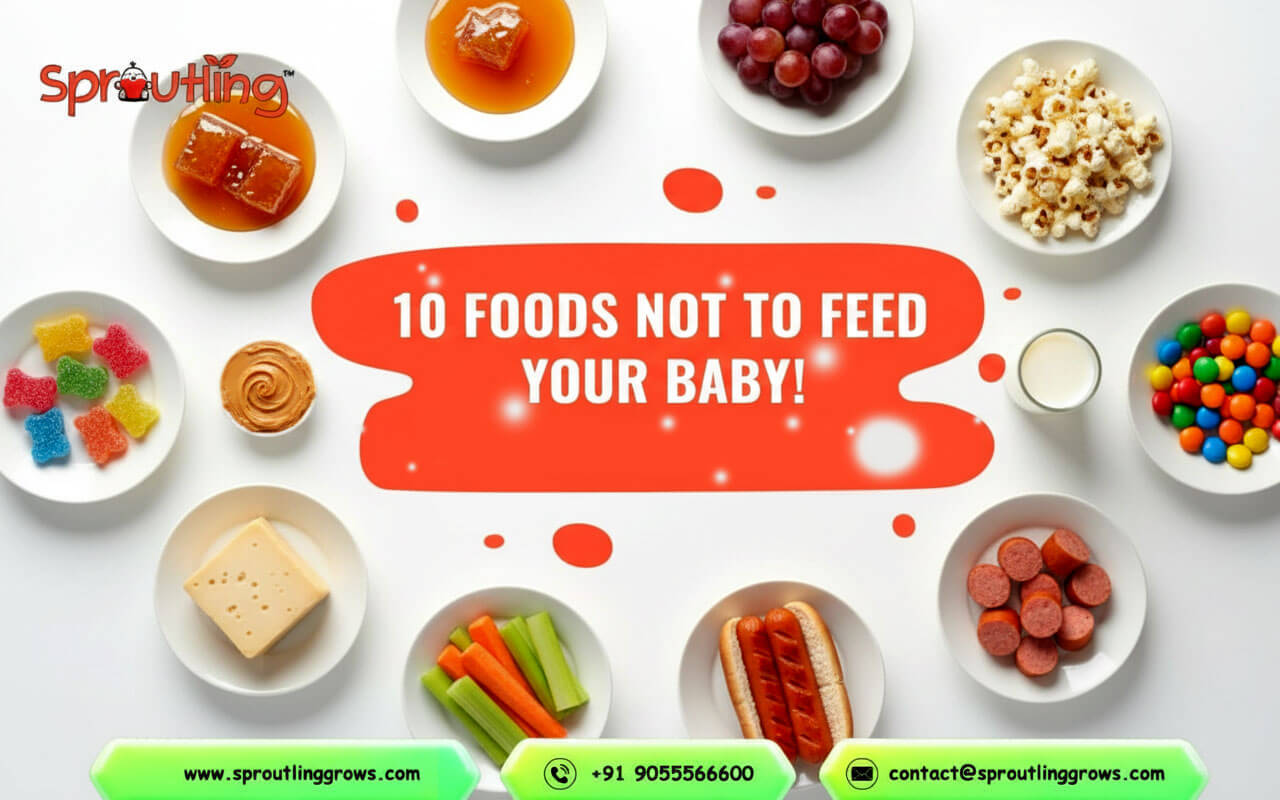
Top 10 Foods You Should Never Feed Your Baby
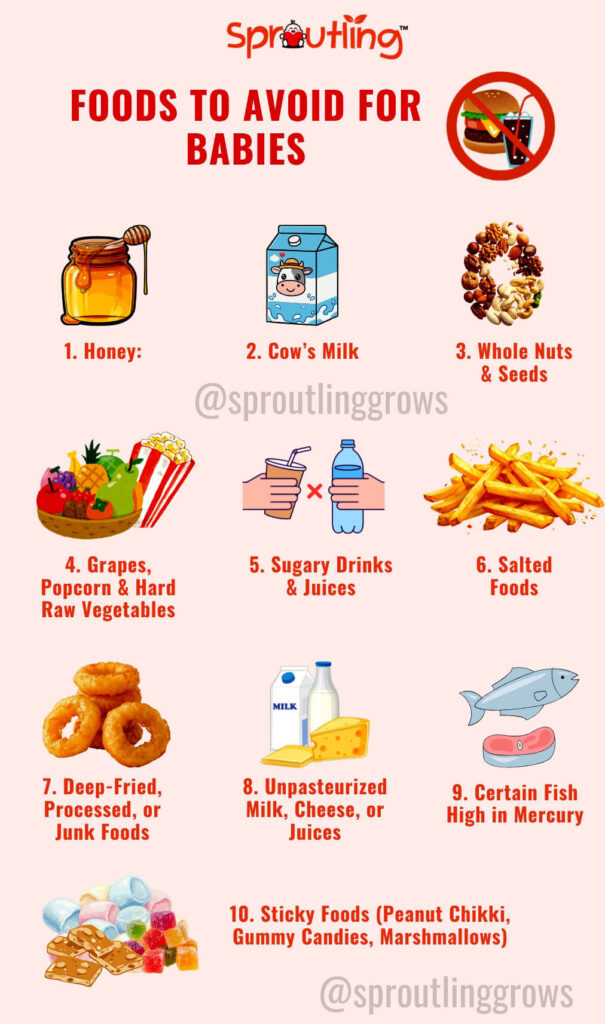
1. Honey: Risk of Infant Botulism
Never give honey to a baby younger than one year old. Honey can contain Clostridium botulinum spores, which cause a rare but serious illness called infant botulism. When can a baby eat honey? Not until after their first birthday.
2. Cow’s Milk (Before 1 Year)
Do not serve plain cow’s milk as a drink before age one. It is difficult for a baby’s kidneys to process the high levels of protein and minerals. It also interferes with iron absorption, increasing the risk of anemia. Breast milk or formula is the only appropriate drink.
3. Whole Nuts & Seeds
Whole nuts and seeds are a major choking hazard. They are simply too small and hard for an infant to manage. Instead, you can safely introduce nut allergens by using smooth, thin nut butters mixed into porridge or yogurt after checking with your pediatrician.
4. Grapes, Popcorn & Hard Raw Vegetables
These are classic high choking-risk foods. Whole grapes, chunks of raw carrot, and popcorn have the perfect size and rigidity to block a baby’s airway. Always modify safely by cutting grapes into quarters or small sticks, and steaming or cooking vegetables until they are soft enough to mash between your fingers.
5. Sugary Drinks & Juices
Sugary drinks and juices offer no nutritional benefit. They fill up your baby’s small tummy, displacing nutritious food, and contribute to tooth decay and the risk of childhood obesity. Offer only water, breast milk, or formula.
6. Salted Foods (Chips, Pickles, Packaged Snacks)
Salted chips, pretzels, and many packaged snacks contain far too much sodium. Why is salt bad for infants? Their tiny kidneys struggle to process a sodium overload. This is why you must use special safe food prep techniques when making homemade baby food, avoiding salt entirely.
7. Deep-Fried, Processed, or Junk Foods
These foods contain unhealthy fats (like trans fats) and artificial additives that offer poor nutrition for a rapidly growing baby. Stick to whole, unprocessed foods.
8. Unpasteurized Milk, Cheese, or Juices
Unpasteurized products may carry harmful bacteria like E. coli and Salmonella, which can cause serious bacterial infections in an infant.
9. Certain Fish High in Mercury
Limit or avoid fish high in mercury, such as swordfish, king mackerel, and some types of tuna. Mercury can harm a baby’s developing nervous system. Stick to low-mercury options like salmon, cod, or light canned tuna (in moderation).
10. Sticky Foods (Peanut Chikki, Gummy Candies, Marshmallows)
Very sticky foods like gummy candies, marshmallows, and hard caramel can easily get stuck in the throat and pose an extreme choking risk. These are truly foods babies cannot eat.
Bonus List: Foods to Be Careful With
While not strictly forbidden foods for babies under one, you must introduce these foods carefully and watch for a reaction. This list includes common allergens or foods that can cause tummy irritation:
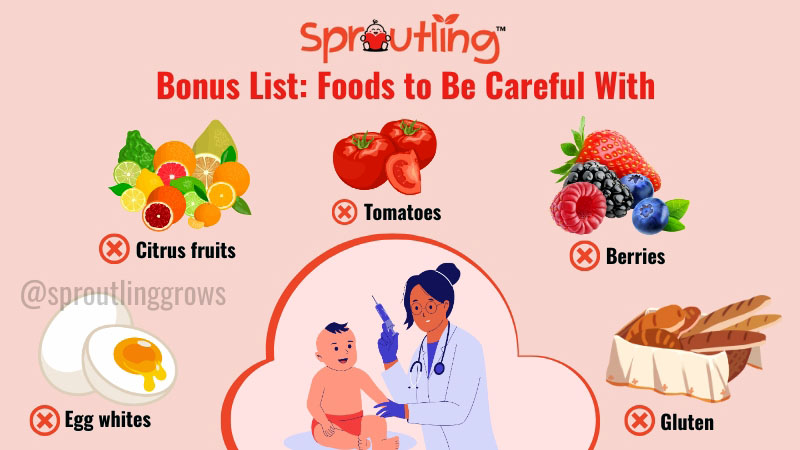
- Egg whites (often introduced after the yolk)
- Citrus fruits (high acid content can cause a rash)
- Tomatoes (similar to citrus, high acid)
- Berries (introduce one type at a time)
- Gluten (introduce small amounts of wheat-based foods)
Always start with a tiny portion size and prepare the food to the correct, soft texture.
How to Introduce New Foods Safely?
Follow a simple plan to introduce any new food, especially potential allergen foods to avoid for infants (like peanut, egg, soy, etc., until introduced):
- 3-Day Rule: Introduce only one new food every three days. This makes it easy to spot the culprit if a reaction occurs.
- Watching for Allergy Reactions: Look for signs like hives, swelling, vomiting, or difficulty breathing.
- Correct Texture by Age: Foods should be soft enough for a baby to gum. Avoid all hard, round, or sticky textures.
- Appropriate Portion Size: Start with a few teaspoons and gradually increase the amount.
Healthy & Safe Food Alternatives for Babies (0–12 Months)
Focus your homemade baby food and baby feeding tips on these nutrient-dense options:
- Mashed and puréed sweet potatoes, avocados, and bananas.
- Iron-rich baby cereals mixed with formula or breast milk.
- Soft-cooked grains like oatmeal or rice porridge.
- Puréed lentils and beans (great source of protein).
- Thoroughly cooked and puréed meats.
Conclusion
Feeding your baby is a joyful experience, and understanding what not to feed a baby keeps them safe and healthy. Remember the top foods to avoid for a baby, watch for choking hazards, and introduce foods slowly.
Your baby’s safety begins with informed choices, and you’re already taking the right steps.
FAQs
1. Can babies eat salt?
No. Their kidneys cannot process the sodium. Avoid adding salt when making homemade baby food.
2. When can babies drink cow’s milk?
After their first birthday (12 months old). Before that, stick to breast milk or formula.
3. What is the riskiest food for babies?
Honey (due to botulism risk) and whole, round foods like grapes (due to severe choking risk).
4. Can babies choke on bananas?
Bananas are generally safe when ripe. However, a baby can choke on any food, so always mash them well, serve in long strips for BLW, and supervise closely.